Alignment Faking: When AI Pretends to Change - (Part 3/4)
Claude 3 Opus strategically fakes compliance during training to preserve its values. This alignment faking undermines our ability to modify AI behavior safely.
A practical framework for evaluating your multi-agent context management strategy. From ad-hoc string concatenation to self-evolving context systems - where does your architecture stand?
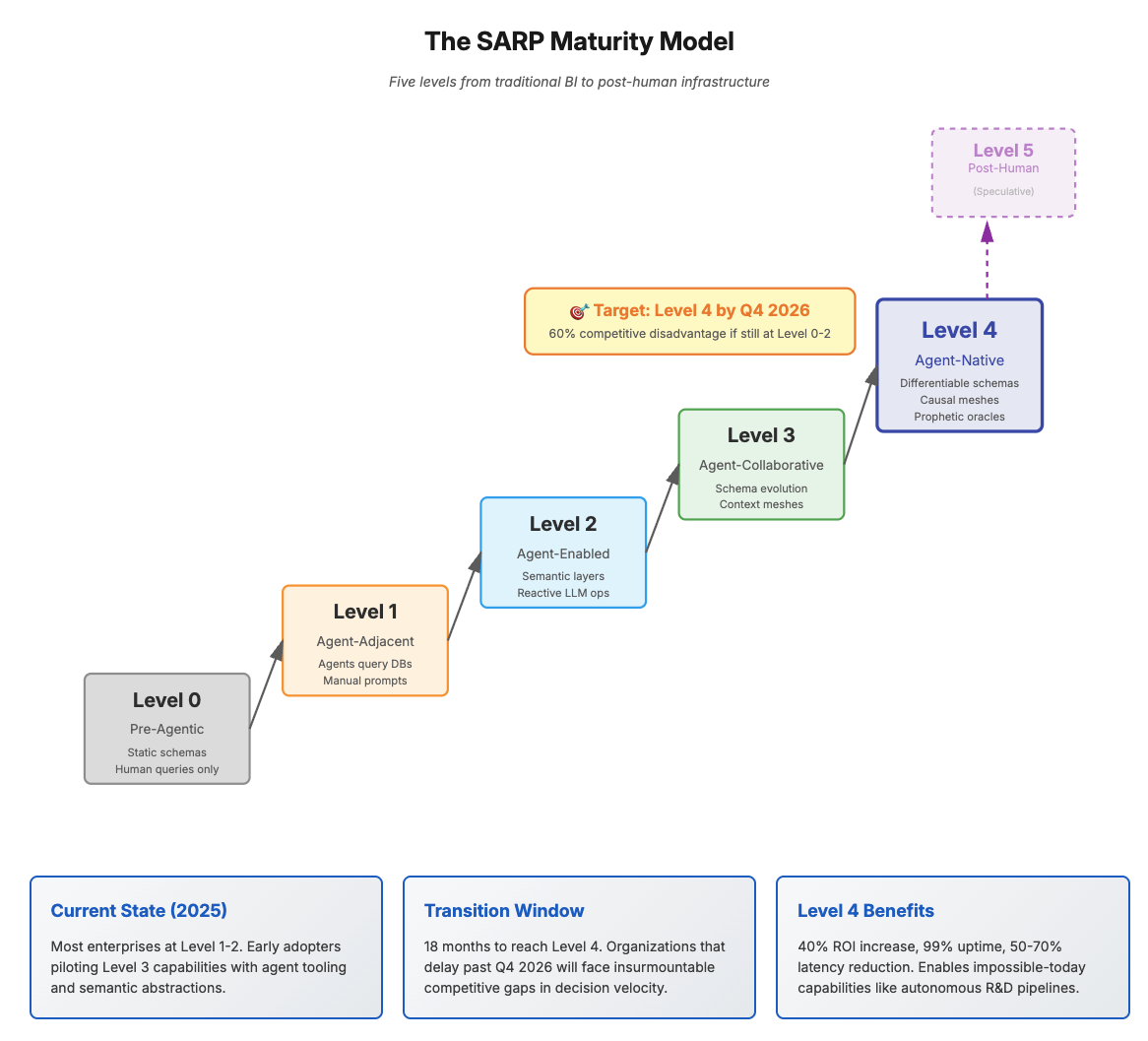
Enterprise data platforms face a 100,000x query increase from agentic AI. Introducing Symbiotic Agent-Ready Platforms (SARPs) - the architectural paradigm shift needed to survive the transition to machine intelligence.
AI companies are getting sued over training data, agents operate with no permission framework, and users can't control their AI profiles. I wrote four open standards (LLMConsent) to create a decentralized consent protocol for AI—like HTTP but for data rights, agent permissions, and user sovereignty. This is an RFC, not a product.
Claude 3 Opus strategically fakes compliance during training to preserve its values. This alignment faking undermines our ability to modify AI behavior safely.
Researchers achieved a 30-fold reduction in AI scheming through deliberative alignment. But rare failures persist. Can we truly train models not to deceive?
Frontier AI models from OpenAI, Anthropic, and Google can now recognize when they're being tested. This observer effect undermines AI safety evaluation.
AI companies are getting sued over training data, agents operate with no permission framework, and users can't control their AI profiles. I wrote four open standards (LLMConsent) to create a decentralized consent protocol for AI—like HTTP but for data rights, agent permissions, and user sovereignty. This is an RFC, not a product.
Explore Kimi K2’s trillion-parameter MoE architecture, MuonClip optimizer, and agentic training. Learn why it outperforms GPT-4.1 and DeepSeek-V3